
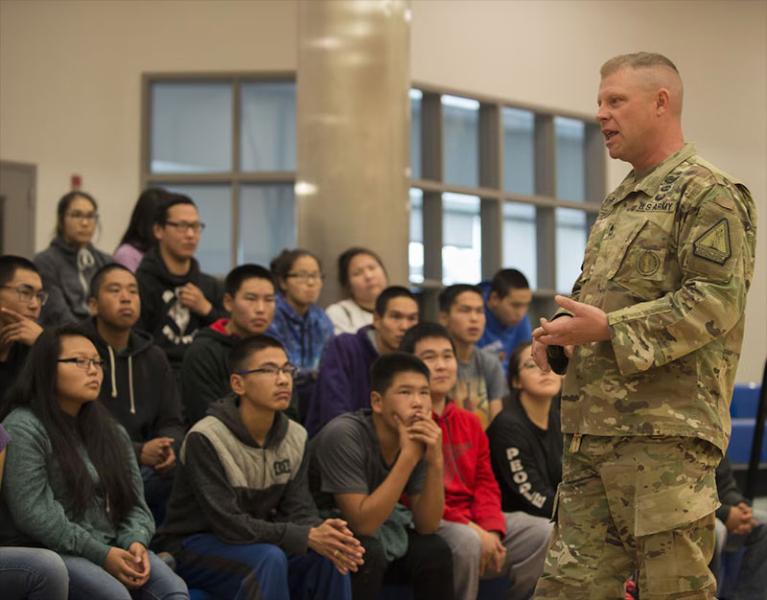
Recruitment doesn’t begin with a contract — it begins with pressure. These videos expose the tactics young people face long before enlistment: the promises that sound like opportunity, the authority that feels impossible to refuse, and the subtle coercion woven into school culture and youth‑targeted outreach. Each testimony cuts through the patriotic messaging and recruiter assurances to reveal the lived reality behind enlistment, offering young people, educators, and communities a grounded view of what recruitment actually looks and feels like.
Advice for those considering joining the military
03:34 | Retired Special Forces Master Sergeant Stan Goff explains what military life really entails. The reality of military life is far more controlled, demanding, and emotionally costly than most recruitment messaging ever admits. What looks like structure and purpose from the outside often becomes a daily loss of autonomy on the inside. From the moment recruits wake up, every hour is scheduled, every movement monitored, every mistake punished. Basic training is designed to break down individuality, not build it — replacing personal judgment with obedience, and confidence with dependence on the chain of command.
"You're not going to be defending your country. You're going to be advancing the interests of people who already have a lot of power."
— Retired master sergeant Stan Goff
Throughout the video, Goff explains how enlistment binds young people to an institution that can change their job, location, risk level, and even the length of their service without their consent. He warns that the military’s promises of honor, adventure, or financial stability often mask the reality: trauma, moral injury, loss of autonomy, and participation in wars that have little to do with protecting the public. Veterans in the comments echo his words, describing nightmares, disillusionment, and the realization that they were used as pawns in geopolitical games. Goff’s testimony cuts through the noise with rare honesty — not to condemn individual service members, but to expose the machinery that exploits them.
Counter Recruiters in High Schools — MoralPolitics
28:08 | Local producer interview. Recruiters omit information and misrepresent the whole picture, using instead, unethical methods to fraudulently induce underaged teenagers into the military . s counter‑recruiters, our role isn’t to tell students what to do — it’s to make sure they aren’t making a decision based on half‑truths or high‑pressure sales tactics. Young people are often shown the benefits of military service, but rarely the risks: the loss of personal freedom, the physical and psychological toll, the dangers of training and deployment, and the long‑term consequences that can follow them for years.
"Recruiters omit information and misrepresent the whole picture, using unethical methods to fraudulently induce underaged teenagers into the military"
—Todd Boyle, Washington Truth in Recruiting in Seattle
“Counter Recruiters in High Schools” is a revealing, wide‑ranging interview that exposes how deeply military recruiters operate inside American public schools — and how little students and parents understand about the tactics being used on minors. Hosted on the program Moral Politics, the segment features Navy veteran and organizer Todd Boyle, who explains how the No Child Left Behind Act opened the door for uniformed recruiters to roam hallways, cafeterias, athletic events, and even proms, targeting 15‑, 16‑, and 17‑year‑olds who cannot legally vote, drink, or sign contracts. Boyle describes a system where recruiters become part of the school’s background, building relationships with teenagers long before they are old enough to enlist.
The US Military's Shady Recruitment Practices
16:11 | The US military has come under fire recently for a new, aggressive recruitment campaign aimed at enticing Gen Z to enlist. In this episode, we'll take a look at some of the more predatory practices in this new propaganda campaign and discuss why it's happening.
"Do not join. He's not your friend. He's a salesman and his job is to get you to buy into a contract to serve."
—Veteran comment in the video
“The U.S. Military’s Shady Recruitment Practices” is a sharp, accessible breakdown of how the U.S. military markets itself to young people — and how those tactics hide the real costs of enlistment. The video exposes the increasingly aggressive recruitment campaigns aimed at Gen Z, showing how the military uses trendy aesthetics, inclusive branding, and pop‑culture references to make war look like a lifestyle choice rather than a deadly institution. Behind the polished ads, the film reveals a system built on manipulation: recruiters who show up unannounced at schools, who pressure teens during lunch periods, who downplay sexual assault, suicide rates, and the physical and psychological dangers of service.