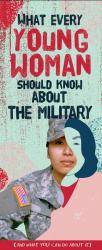
For more than 50 years, Selective Service and the registration requirement for America's young men have served as a backup system to provide manpower to the U.S. Armed Forces.
President Franklin Roosevelt signed the Selective Training and Service Act of 1940 which created the country's first peacetime draft and formally established the Selective Service System as an independent Federal agency.
From 1948 until 1973, during both peacetime and periods of conflict, men were drafted to fill vacancies in the armed forces which could not be filled through voluntary means.
A lottery drawing - the first since 1942 - was held on December 1, 1969, at Selective Service National Headquarters in Washington, D.C. This event determined the order of call for induction during calendar year 1970, that is, for registrants born between January 1, 1944 and December 31, 1950. Reinstitution of the lottery was a change from the oldest first method, which had been the determining method for deciding order of call.
366 blue plastic capsules containing birth dates were placed in a large glass jar and drawn by hand to assign order-of-call numbers to all men within the 18-26 age range specified in Selective Service law.
With radio, film and TV coverage, the capsules were drawn from the jar, opened, and the dates inside posted in order. The first capsule - drawn by Congressman Alexander Pirine (R-NY) of the House Armed Services Committee - contained the date September 14, so all men born on September 14 in any year between 1944 and 1950 were assigned lottery number 1. The drawing continued until all days of the year had been matched to lottery numbers.
In 1973, the draft ended and the U.S. converted to an All-Volunteer military.
The registration requirement was suspended in April 1975. It was resumed again in 1980 by President Carter in response to the Soviet invasion of Afghanistan. Registration continues today as a hedge against underestimating the number of servicemen needed in a future crisis
How the Draft has Changed Since Vietnam
If a draft were held today, it would be dramatically different from the one held during the Vietnam War. A series of reforms during the latter part of the Vietnam conflict changed the way the draft operated to make it more fair and equitable. If a draft were held today, there would be fewer reasons to excuse a man from service.
Before Congress made improvements to the draft in 1971, a man could qualify for a student deferment if he could show he was a full-time student making satisfactory progress toward a degree.
Under the current draft law, a college student can have his induction postponed only until the end of the current semester. A senior can be postponed until the end of the academic year.
If a draft were held today, local boards would better represent the communities they serve.
The changes in the new draft law made in 1971 included the provision that membership on the boards was required to be as representative as possible of the racial and national origin of registrants in the area served by the board.
A draft held today would use a lottery to determine the order of call.
Before the lottery was implemented in the latter part of the Vietnam conflict, Local Boards called men classified 1-A, 18 1/2 through 25 years old, oldest first. This resulted in uncertainty for the potential draftees during the entire time they were within the draft-eligible age group. A draft held today would use a lottery system under which a man would spend only one year in first priority for the draft - either the calendar year he turned 20 or the year his deferment ended. Each year after that, he would be placed in a succeedingly lower priority group and his liability for the draft would lessen accordingly. In this way, he would be spared the uncertainty of waiting until his 26th birthday to be certain he would not be drafted.
Source: http://usmilitary.about.com/od/deploymentsconflicts/l/bldrafthistory.htm
Current Status
Draft Registration
Conscientious Objection
Poverty Draft
Current Status
Conscription in the United States (also called compulsory military service or the draft) has been employed several times, usually during war but also during the nominal peace of the Cold War. The United States discontinued the draft in 1973, moving to an all-volunteer military force, thus there is no mandatory conscription.
However, the Selective Service System remains in place as a contingency plan; men between the ages of 18 and 25 are required to register so that a draft can be readily resumed if needed.
Source: http://en.wikipedia.org/wiki/Conscription_in_the_United_States
Draft Registration
The Selective Service System wants you to know that the requirement to register for the military draft did not go away with the end of the Vietnam War. Under the law, virtually all male U.S. citizens, and male aliens living in the U.S., who are ages 18 through 25, are required to register with Selective Service.
Since there is no draft currently in effect, and men are not being classified for service, disabled men, clergymen, and men who believe themselves to be conscientiously opposed to war must also register.
- Student Financial Aid - including Pell Grants, College Work Study, Guaranteed Student/Plus Loans, and National Direct Student Loans.
- U.S. Citizenship - if the man first arrived in the U.S. before his 26th birthday.
- Federal Job Training - The Job Training Partnership Act (JTPA) offers programs that can train young men for jobs in auto mechanics and other skills. This program is only open to those men who register with Selective Service.
- Federal Jobs - men born after December 31, 1959 must be registered to be eligible for jobs in the Executive Branch of the Federal government and the U.S. Postal Service.
In addition, several states have added additional penalties for those who fail to register.
You may have read or been told that there is no need to register, because so few people are prosecuted for failing to register. The goal of the Selective Service System is registration, not prosecution. Even though those who fail to register may not be prosecuted they will be denied student financial assistance, federal job training, and most federal employment unless they can provide convincing evidence to the agency providing the benefit they are seeking, that their failure to register was not knowing and willful.
Who Does NOT Have to Register for the Draft?
Men who are not required to register with Selective Service include: nonimmigrant aliens in the U.S. on student, visitor, tourist, or diplomatic visas; men on active duty in the U.S. Armed Forces; and cadets and midshipmen in the Service Academies and certain other U.S. military colleges. All other men must register upon reaching age 18 (or before age 26, if entering and taking up residence in the U.S. when already older than 18).
What About Women and the Draft?
While women officers and enlisted personnel serve with distinction in the U.S. Armed Forces, women have never been subject to Selective Service registration or a military draft in America. For a complete explanation of the reasons for this, see: Backgrounder: Women and the draft in America from the Selective Service System.
Source: http://usgovinfo.about.com/od/defenseandsecurity/a/draftreg.htm
Conscientious Objection
The government has the power to make people fight a war. But many young men and women have serious questions about whether it is right to take part in war. That may mean that they are conscientious objectors. They may not know the term, or that there is such a thing as conscientious objection to war.
Fortunately, there is a long tradition that is getting stronger as people with all kinds of backgrounds share the conviction that war is wrong. The Constitution gives the government the power to raise an army and people can be drafted to fight. But, there is an established right to conscientious objection dating from before the Constitution which has been recognized during the periods that people were forced into the military.
Often the beliefs of these objectors to war are well thought out, showing study and detailed knowledge. Sometimes their convictions are simple and uncomplicated. Many have their beliefs as part of their religion. Others have come to their beliefs on their own.
They all have a right to have these beliefs in opposition to war and should be supported in them. They are conscientious objectors (COs) whether or not the government says so.
Once people hear about conscientious objection, they want to know what is necessary to qualify as a CO with the government. That process is sometimes hard. The rules are fairly specific (but not always fair). However, if COs are properly prepared, NISBCO believes they will be recognized.
Source: http://www.scn.org/ip/sdmcc/co.htm
Poverty Draft
The majority of military recruits come from below-median income neighborhoods . This pattern has been going on for a long time. It’s called the Poverty Draft, and it’s no coincidence.
It’s the result of the unfair setup where opportunities are systematically eliminated in the communities that need them the most, while the military continues to get more and more funding.
We have decrepit schools, bad housing, limited job options and poor healthcare. Despite our serious needs, the government spends more money trying to convince us to join the military than on basic human needs like education.
The pentagon dropped $13,000 recruiting each person who enlisted. Compare that to the $1,115 that is spent on education per student, and you’ve got a pretty clear picture of the government’s priorities.
Military recruiters are out in full force in the neighborhoods that are hurting the most, preying on the lack of opportunities. They want us to believe that the only option for us is to join up. They say we’ll be safer at war overseas than on our block. They’re promising college tuition, job training, and adventure.
It’s working. As a result of aggressive recruiting, for the past three years, more youth from below-median income neighborhoods are joining than from other neighborhoods . In 2004, 71% of black recruits, 65% of Latino recruits, and 58% of white recruits came from below median income neighborhoods .
The military’s own numbers are proving that fewer and fewer of people recruited have had access to a good education. The percentage of recruits who were regular high school graduates dropped from 86% in 2004 to 73% in 2006 .
Unfortunately, we’re the ones who pay the price of the Poverty Draft setup.
What recruiters don’t tell us is that 75% of blacks & 67% of Latinos report experiencing racial discrimination in the military. They skip over the fact that 1 out of 3 women in the military reported being raped. They never mention that the college money is difficult to come by- only 16% of enlisted personnel who completed four years of military duty ever received money for schooling. They don’t say that the job skills they promise won’t transfer into the real world. Only 12% of male veterans and 6% of female veterans use skills learned in the military in their current jobs. And of course, they downplay the risk of being killed while on duty.