Various Dates / Various Authors / Quora - Many view military service in the US Military from a personal perspective outside the official narrative of military recruiters and U.S. Government agencies that carry the official line as is demanded of them. A basic question of why American citizen's should not join the military, and why, is not an often offered as a subject for a public discussion as one might expect. Reasons an American citizen might choose not to join the military, and the lack of widespread public discussion on these points, involve a mix of practical, personal, ethical, and cultural factors as well. Though the NNOMY website does not republish discussions from public forums online, we make an exception to the question, "Are there any reasons why an American citizen shouldn't join the military" and listen to the perspectives of people with opinions and even experience on the question courtesy of the Quora Online Forum.
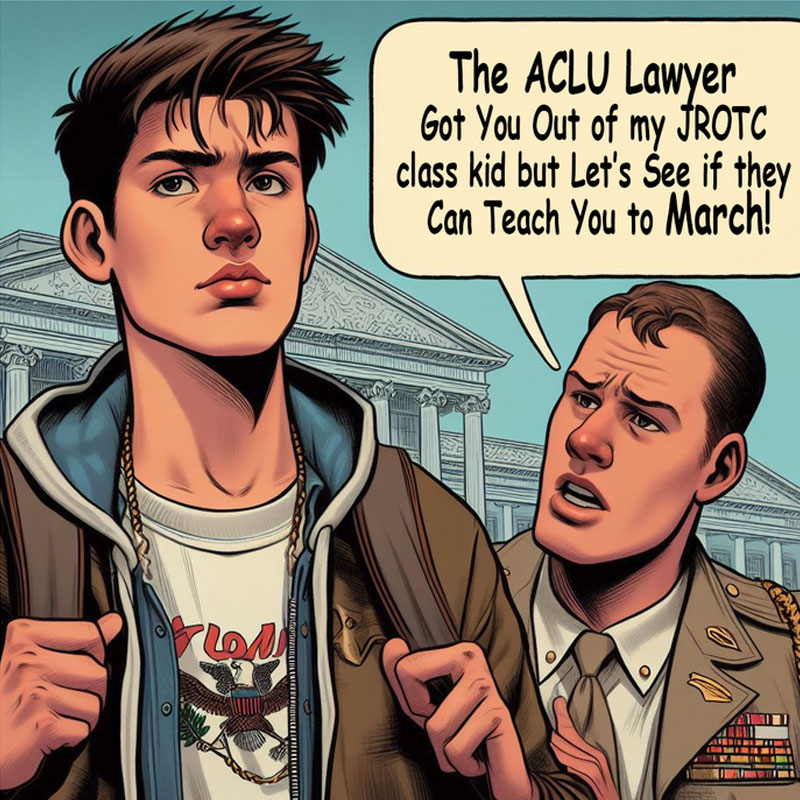
Militarization of our Schools
The Pentagon is taking over our poorer public schools. This is the reality for disadvantaged youth.
What we can do
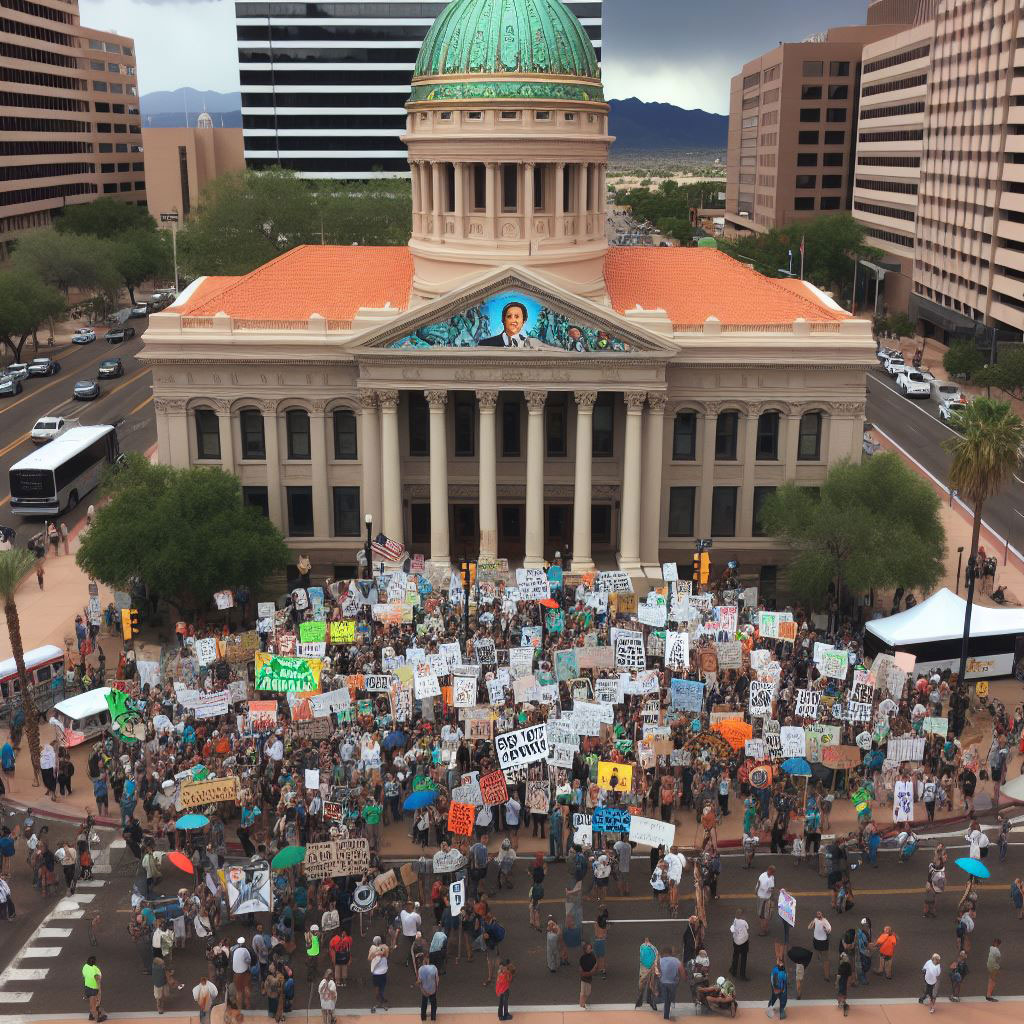
Corporate/conservative alliances threaten Democracy . Progressives have an important role to play.
Why does NNOMY matter?
Most are blind or indifferent to the problem.
A few strive to protect our democracy.
The National Network Opposing the Militarization of Youth (NNOMY)
Articles
español -
Looking back: The Resolution Sparks a Movement
In 2003, the San Francisco Unified School District (SFUSD) adopted a bold resolution to protect student privacy and resist military recruitment in public schools. What began as a local stand against the encroachment of the No Child Left Behind Act’s Section 9528—granting military recruiters access to student data—evolved into a two-decade movement that reshaped youth activism, policy, and public consciousness.
Amid growing opposition to the Iraq War, San Francisco passed a landmark resolution declaring the city a “Military Recruitment-Free Zone.” This symbolic stance aligned with its broader identity as a sanctuary city and peace-oriented municipality.
On January 14, 2003, SFUSD passed Resolution 212-10A15, affirming students’ and parents’ rights to opt out of military data sharing. The resolution mandated resource packets on alternatives to military service, featuring groups like CCCO, AFSC, and the National Lawyers Guild. It required opt-out cards for all high school students and classroom discussions on privacy and militarism. This policy, introduced on UN Human Rights Day, was a direct response to the Bush-era militarization of education and the $2.4 billion recruitment budget targeting youth.
español -
January 14, 2020 / Jacqueline Luqman / The Real News Network - Last week and this, Black Twitter was aflood with funny memes that seem to make light about how black people aren’t included in the “We’re going to war with Iran” sentiment because the push for this war wasn’t about black people or what black people wanted. But all jokes aside, are black and Latino and native and poor white people really sitting on the sidelines of America’s military actions, or are they more involved in them than they realize or would even like to be?
Here to talk about all the ways that black people, brown people, and poor people actually are the people most targeted by military recruiters, which puts them right in the cross hairs of military action, is Erica Caines. Erica is a local organizer in Baltimore and is the founder of Liberation Through Reading. You can find that on #liberationthroughreading on Twitter. Erica, thank you so much for joining.
español | Deutsch | Français | English -
May 1, 2008 / War Resisters' International - With a seemingly endless war on terrorism gnawing away at the possibility for a lasting peace many activists in the United States are finding that they are drawn to a form of activism that deals with the relationship that young people have to militarism. The work is called, counter military recruitment or counter-recruitment for short, and it primary focus is to demilitarise a nation by attempting to first demilitarise the minds of its youth.
Often maligned and misunderstood by those outside of the peace & justice movement counter-recruitment has a roughly thirty year history which began shortly after the end of the US involvement in Vietnam which led to the suspension of the military draft. The ending of the draft meant that the military needed to adapt in order to recruit people into the “all volunteer” service and this heralded in the wide variety of incentives and recruitment tactics used to entice people to enlist. Many of these are still in use to this day and the primary concern with military recruitment is that young people aren’t getting all the information they need from military recruiters to make an informed decision about enlisting. While it may seem difficult to comprehend that young people in the US are able to be deceived by military recruiters, the reality is that militarism is that which can cloud the minds of masses. In this respect, many young people never question the sales pitch the men and women in uniform use to recruit them.
Knowing that militarism is the leverage used to sell the military, counter military recruitment is a direct response which counters the perceptions of the military as a sacred cow, or a pillar of our society, and that which keeps us free. Counter recruitment activists often work behind the scenes to change school policies on military recruiter access to young people rather than holding high profile campaigns and demonstrations. The core message associated with counter-recruitment is that one should be able to make an informed decision especially if it is a life altering decision that they are bound to for eight years of their life. Thousands of people and hundreds of groups are now engaged in this work, but a quick look at the past reveals that this was not the case thirty years ago.
Trump makes obvious dictatorial potentials that have long been growing
español -
O
ct 08, 2025 / Patrick Mazza / The Raven - History is catching up with the United States. The center of the most globe-spanning empire in history, empire is now coming home to its own shores.
The scenes of troops in the streets, with people being seized and hauled off to camps, ordered by a would-be strongman who acts as a law unto himself, have been witnessed in many countries. We have seen it all too often. Some notable examples have been Chile, Brazil, Guatemala, Iran and Indonesia, spurred by U.S. covert actions to preserve the power of domestic oligarchies beholden to U.S. economic interests. Now we see the same brute assertions of absolute power coming to the U.S., for much the same reasons.
Empires can pursue the most dictatorial policies in their colonial reaches while preserving liberal democracy in their domestic metropoles. In fact, the wealth provided by empire allows this. But when things tighten up, and competition for limited resources increases, liberal democracy fades and the velvet glove comes off the iron fist.
The House won’t get to vote on this proposal to end Selective Service.
español - -
September 9, 2025 / Edward Hasbrouck / Edward Hasbrouck's blog - Early this morning, after overnight behind-the-scenes discussions, the Rules Committee of the U.S. House of Representatives voted to propose a rule for House floor consideration of this year’s National Defense [sic] Authorization Act (NDAA) that leaves the proposal for attempted automatic registration of young men for a possible military draft in the version of the NDAA to be debated and voted on by the full House, and prevents any debate or vote on the “automatic” registration proposal or the alternate proposal to end draft registration.
The House Rules Committee recommended “making in order” for House floor debate and vote almost 300 amendments to the NDAA, but not the bipartisan amendment to replace the provision to try to automate draft registration with a provision to repeal the Military Selective Service Act, end draft registration, and abolish the Selective Service System. (Scroll down here for the list of amendments submitted to the Rules Committee and those made in order for floor debate and votes.) There was no public discussion by the Rules Committee of any of the proposals with respect to Selective Service.
- From Segregation to the Backdoor Draft: How Structural Racism Fuels America’s Endless Wars
- For the UN International Day of Peace 2025: NNOMY Contributes Resources to Demilitarize Our Schools
- Charlie Kirk and Turning Point as recruitment tool
- House Rules Committee blocks vote on ending Selective Service
NNOMY is Funded by
FAIR USE NOTICE
FAIR USE NOTICE
This site contains copyrighted material the use of which has not always been specifically authorized by the copyright owner. We are making such material available in our efforts to advance understanding of issues connected with militarism and resistance. We believe this constitutes a ‘fair use’ of any such copyrighted material as provided for in section 107 of the US Copyright Law. In accordance with Title 17 U.S.C. Section 107, the material on this site is distributed without profit to those who have expressed a prior interest in receiving the included information for research and educational purposes. For more information go to: https://www.law.cornell.edu/uscode/17/107.shtml. If you wish to use copyrighted material from this site for purposes of your own that go beyond ‘fair use’, you must obtain permission from the copyright owner.
Contact NNOMY
NNOMY
The National Network Opposing
the Militarization of youth
San Diego Peace Campus
3850 Westgate Place
San Diego, California 92105 U.S.A.
admin@nnomy.org +1 619 798-8335
Tuesdays & Thursdays 12 Noon till 5pm PST
NNOMY Volunteer and Internship Inquiries