Though the United States of America shares with other nations in a history of modern state militarism, the past 78 years following its consolidation as a world military power after World War II has seen a shift away from previous democratic characterizations of the state. The last forty years, with the rise of the neo-conservative Reagan and Bush (2) administrations, began the abandonment of moral justifications for democracy building replaced by bellicose proclamations of the need and right to move towards a national project of global security by preemptive military force. Even with the return of eight years of the, so called, Liberal Obama administrations we saw the further erosion of long held human right protections with the suspension of habeas corpus and the increased usage of extra-judicial drone bombing killings of claimed combatants in multiple conflicts worldwide. Now with the Trump and Biden administrations, these programs have increased unbeknownst to the general public as the mainstream media silenced and normalized perpetual wars.
In the process of global military expansion, the US population has been subjected to an internal re-education to accept the role of the U.S. as consolidating its hegemonic rule internationally in the interest of liberal ideals of wealth creation and protectionism.
 The average citizen has slowly come to terms with stealthily increasing campaigns of militarization domestically in media offerings; from television, movies, militarized video games, and scripted news networks to reinforce the inevitability of a re-configured society as security state. The effect has begun a transformation of how, as citizens, we understand our roles and viability as workers and families in relation to this security state. This new order has brought with it a shrinking public common and an increasing privatization of publicly held infrastructure; libraries, health clinics, schools and the expectation of diminished social benefits for the poor and middle-class. The national borders are being militarized as are our domestic police forces in the name of Homeland Security but largely in the interest of business. The rate and expansion of research and development for security industries and the government agencies that fund them, now represent the major growth sector of the U.S.economy. Additionally, as the U.S. economy continually shifts from productive capital to financial capital as the engine of growth for wealth creation and development, the corporate culture has seen its fortunes rise politically and its power over the public sector grow relatively unchallenged by a confused citizenry who are watching their social security and jobs diminishing.
 How increasing cultural militarization effects our common future will likely manifest in increased public dissatisfaction with political leadership and economic strictures. Social movements within the peace community, like NNOMY, will need to expand their role of addressing the dangers of militarists predating youth for military recruitment in school to giving more visibility to the additional dangers of the role of an influential militarized media, violent entertainment and play offerings effecting our youth in formation and a general increase and influence of the military complex in all aspects of our lives. We are confronted with a demand for a greater awareness of the inter-relationships of militarism in the entire landscape of domestic U.S. society. Where once we could ignore the impacts of U.S. military adventurisms abroad, we are now faced with the transformation of our domestic comfort zone with the impacts of militarism in our day to day lives where we are witnessing militarized police forces in all our cities.
How this warning can be imparted in a meaningful way by a movement seeking to continue with the stated goals of counter-recruitment and public policy activism, and not loose itself in the process, will be the test for those activists, past and future, who take up the call to protect our youth from the cultural violence of militarism.
 The "militarization of US culture" category will be an archive of editorials and articles about the increasing dangers we face as a people from those who are invested in the business of war. This page will serve as a resource for the NNOMY community of activists and the movement they represent moving into the future. The arguments presented in this archive will offer important realizations for those who are receptive to NNOMY's message of protecting our youth, and thus our entire society, of the abuses militarism plays upon our hopes for a sustainable and truly democratic society.
NNOMY
Please consider becoming a supporter of The National Network Opposing the Militarization of Youth
And our work to demilitarize our schools and youth.
Donate Here
###
Revised / 11/04/2023 - GDG
 June 22, 2022 / Alex Skopic /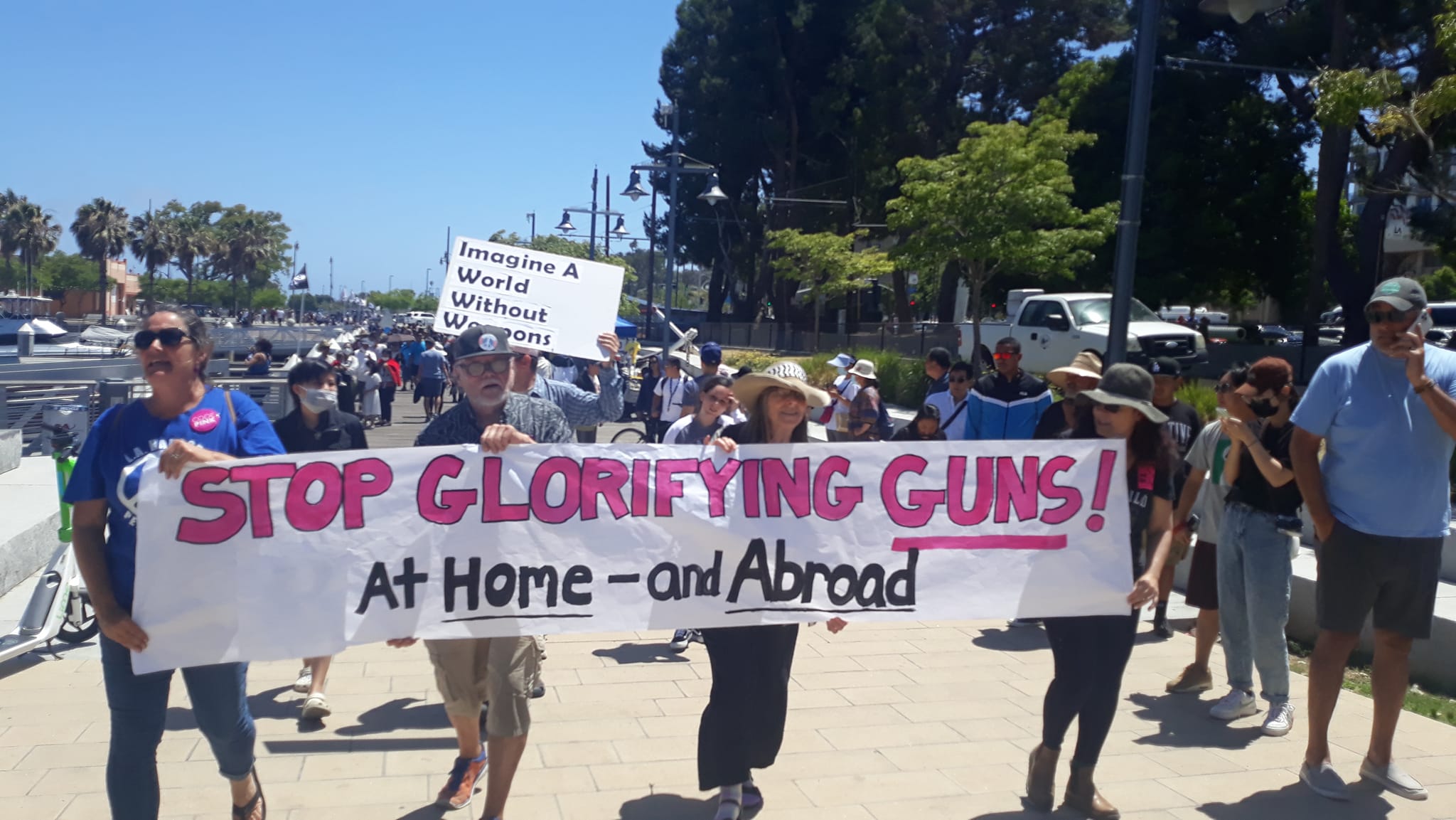
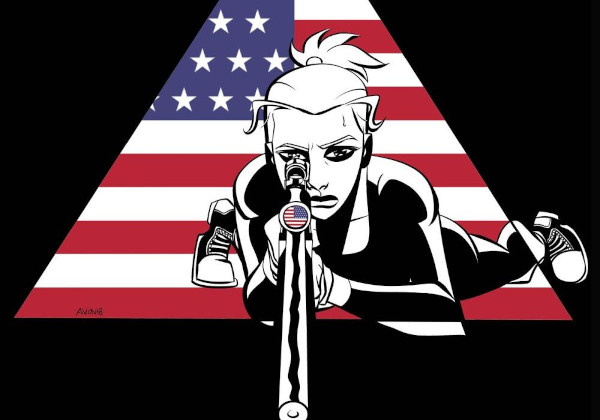 June 2022 / Gary David Ghirardi & Various Sources / NNOMY - It is the summer of 2022 and the country is reeling with the school shooting of 19 LatinX children in an elementary school in Texas. Multiple shootings before and after are all added together with un-answered questions as to the root causes on the nightly news while the spectacle of it all to the millions of viewers becomes another kind of murder against our collective imaginations.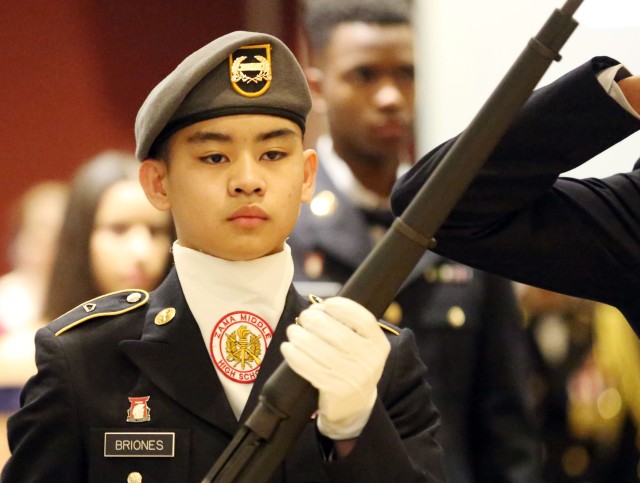

 The warning, given to me 25 years ago, came at the moment Pat Robertson and other radio and televangelists began speaking about a new political religion that would direct its efforts at taking control of all institutions, including mainstream denominations and the government. Its stated goal was to use the United States to create a global, Christian empire. It was hard, at the time, to take such fantastic rhetoric seriously, especially given the buffoonish quality of those who expounded it. But Adams warned us against the blindness caused by intellectual snobbery. The Nazis, he said, were not going to return with swastikas and brown shirts. Their ideological inheritors had found a mask for fascism in the pages of the Bible. - Chris Hedges (From his article:
.jpg "Special Weapons and Tactics (SWAT) team members, some armed with assault rifles, preparing for an exercise")
 David Swanson is the author of the new book, Daybreak: Undoing the Imperial Presidency and Forming a More Perfect Union, by Seven Stories Press and of the introduction to The 35 Articles of Impeachment and the Case for Prosecuting George W. Bush by Dennis Kucinich. In addition to cofounding AfterDowningStreet.org, he is the Washington director of Democrats.com and sits on the boards of a number of progressive organizations in Washington, DC.
 Jorge Mariscal is the grandson of Mexican immigrants and the son of a U.S. Marine who fought in World War II. He served in the U.S. Army in Vietnam and currently teaches at the University of California, San Diego.
 Matt Guynn plays the dual role of program director and coordinator for congregational organizing for On Earth Peace, building peace and nonviolence leadership within the 1000+ congregations of the Church of the Brethren across the United States and Puerto Rico. He previously served a co-coordinator of training for Christian Peacemaker Teams, serving as an unarmed accompanier with political refugees in Chiapas, Mexico, and offering or supporting trainings in the US and Mexico.
 Rick Jahnkow works for two San Diego-based anti-militarist organizations, the Project on Youth and Non-Military Opportunities and the Committee Opposed to Militarism and the Draft. He can be reached at:
  Pat Elder was a co-founder of the

 Edward Hasbrouck grew up in Wellesley, Massachusetts, a suburb of Boston. He considers myself primarily a political activist. Hasbrouck began his resistance to the violence of illegitimate authority as an elected but nonvoting student representative to the local school board and as an activist for peace, disarmament, and students' rights. His first book was a handbook for high school students on their legal rights co-authored in the summer of 1977, between high school and college, as an intern for the student service bureau of the Massachusetts Department of Education. He majored in political science at the University of Chicago until leaving school to pursue direct involvement in political activism.